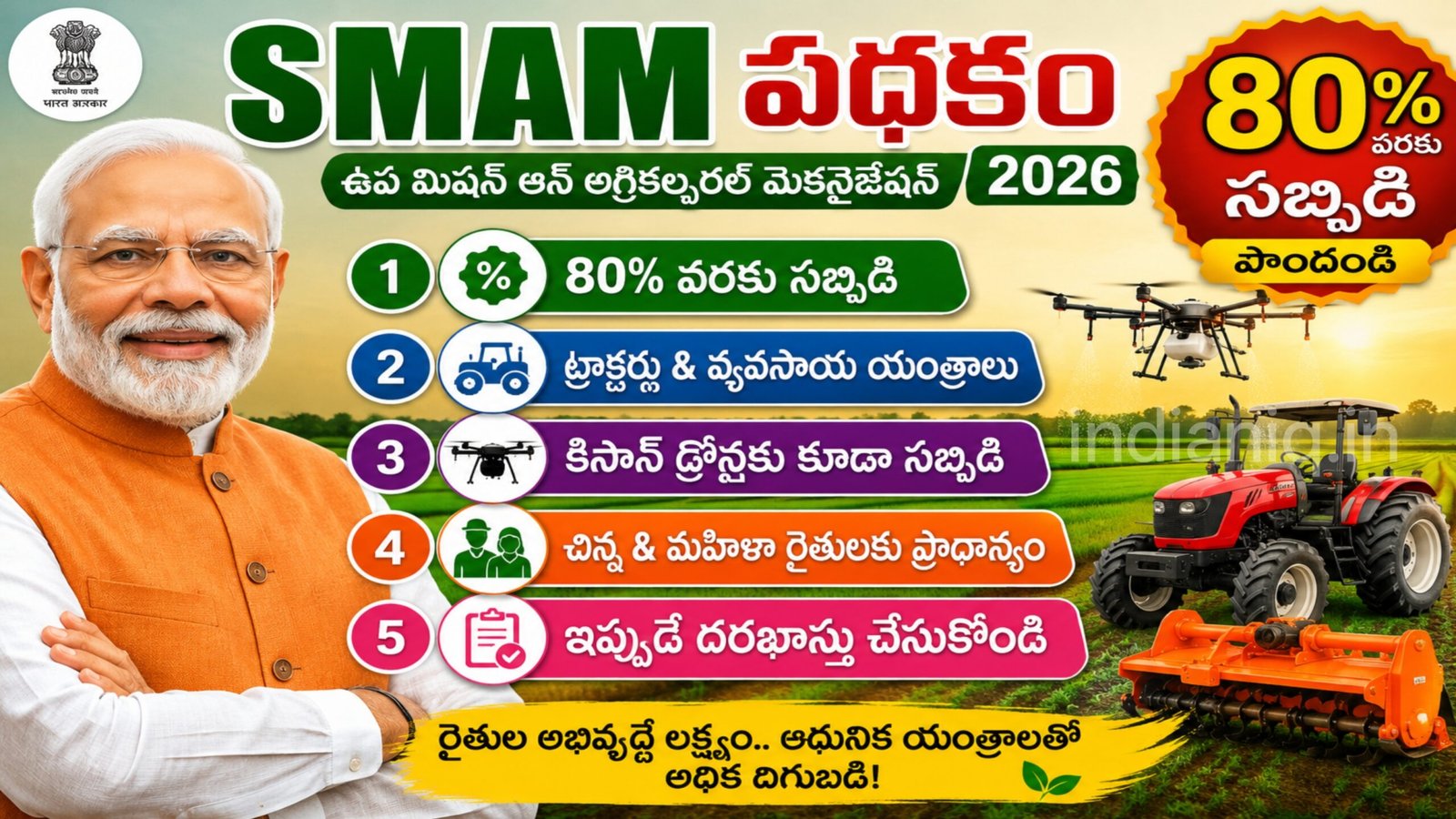
The Sub-Mission on Agricultural Mechanization (SMAM) is an important initiative launched by the Ministry of Agriculture & Farmers’ Welfare, Government of India, to encourage farmers to adopt modern agricultural machinery and advanced farming technologies. The primary objective of the scheme is to improve farm productivity, reduce labor dependency, lower cultivation costs, and increase farmers’ income through mechanized farming.
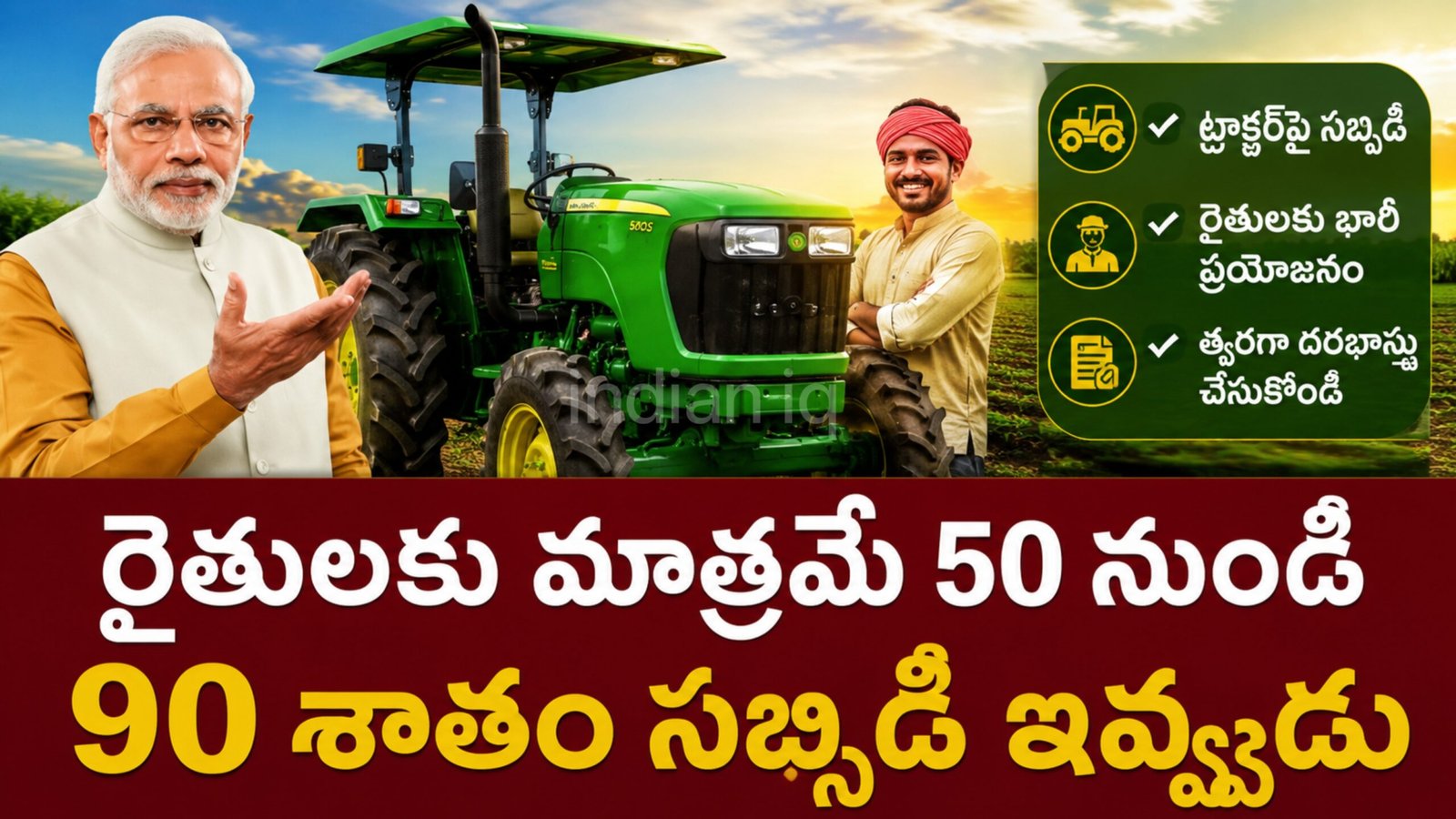
Agricultural mechanization plays a crucial role in making farming more efficient and profitable. However, many small and marginal farmers cannot afford expensive farm equipment such as tractors, power tillers, seed drills, harvesters, rotavators, and drones. To solve this problem, the SMAM scheme offers financial assistance in the form of subsidies ranging from 40% to 80%, depending on the farmer’s category and the type of machinery being purchased.
Under the scheme, general category farmers typically receive a subsidy of 40% to 50% for purchasing eligible agricultural machinery. Farmers belonging to Scheduled Castes (SC), Scheduled Tribes (ST), women farmers, and small or marginal farmers are eligible for higher subsidies, which may range from 50% to 80%. This support helps reduce the financial burden of investing in modern farming equipment.
The scheme also promotes the establishment of Custom Hiring Centres (CHCs) and Farm Machinery Banks, where farmers can rent agricultural equipment at affordable rates instead of purchasing it. These centres are especially beneficial for small farmers who need machinery only during specific farming seasons. Financial assistance of up to 75% to 80% of the project cost is available for setting up such community-based facilities.
One of the major highlights of the SMAM scheme is its focus on women farmers. Around 30% of the total scheme funds are reserved exclusively for women beneficiaries, encouraging greater participation of women in modern agriculture and helping them become economically independent.
The scheme also addresses environmental concerns through its Crop Residue Management (CRM) component. Farmers receive substantial subsidies on machinery such as straw management systems, balers, mulchers, and rotavators, which help manage crop residue efficiently without burning it. This reduces air pollution caused by stubble burning while improving soil health.
Another significant feature is the promotion of Kisan Drones. The government provides financial assistance for drone demonstrations and subsidies for purchasing agricultural drones. These drones are used for precision farming activities such as spraying fertilizers, pesticides, and nutrients, reducing labor costs while improving efficiency. Subsidies are also available for Farmer Producer Organizations (FPOs), Women Self-Help Groups (SHGs), and other eligible institutions.
To apply for the SMAM scheme, farmers must register through the Central Direct Benefit Transfer (DBT) Portal. Applicants are generally required to submit documents such as Aadhaar Card, land ownership records, bank account details, and other necessary identification documents. Farmers can also use the official SMAM Subsidy Calculator to estimate the subsidy amount based on their category and the agricultural equipment they wish to purchase.
Overall, the SMAM scheme is a transformative initiative that supports mechanized agriculture, promotes sustainable farming practices, improves productivity, reduces cultivation costs, empowers women farmers, and enables small and marginal farmers to access modern agricultural technology. It contributes significantly to the modernization of Indian agriculture and helps farmers achieve higher income and better livelihoods.